
The Best Professional-Grade Polishers for Detailers in 2026
DetailCompare is reader-supported. When you buy through links on this page, we may earn an affiliate commission at no extra cost to you. Prices noted were accurate as of August 2026 — click through for current pricing.
Every beginner polisher guide points to the same handful of budget-tier dual action machines, and for a first correction on a driveway that’s the right call. But once you’re correcting more than one or two cars a year — or doing it for other people — the tools that professional detailers actually load into their vans look nothing like a starter kit. RUPES and FLEX build machines around a different problem: covering a whole car, panel after panel, without the motor bogging down, the vibration wearing out your wrist, or a cord getting in the way on the fifth vehicle of the day.
None of these six machines are a beginner’s first polisher, and none of them are cheap. What you’re paying for is speed, consistency across a full detailing schedule, and access to the pad and backing-plate ecosystems that the rest of the professional world has already standardized on. Here’s how the RUPES BigFoot and FLEX lineups actually compare, and which one covers which job.
Our Top Picks
- Best all-around professional polisher: RUPES BigFoot LHR15 Mark V
- Best for large, flat panels: RUPES BigFoot LHR21 Mark III
- Best for tight areas and detail work: RUPES BigFoot LHR75E Mini
- Best cordless multi-tool for small areas: FLEX PXE 80 Cordless Mini
- Best for the hardest, most defect-prone paint: FLEX XCE 8-125 Forced Rotation
- Best corded value in the professional tier: FLEX FC3321-Z Brushless
Comparison
| Polisher | Price | Orbit / drive | Best for |
|---|---|---|---|
| RUPES LHR15 Mark V | $100+ | 15mm random orbital | Whole-car correction, one machine |
| RUPES LHR21 Mark III | $100+ | 21mm random orbital | Hoods, roofs, large flat panels |
| RUPES LHR75E Mini | $100+ | 12mm random orbital, 75mm plate | Mirrors, handles, tight curves |
| FLEX PXE 80 | $100+ | Swappable rotary / 3mm / 12mm | Cordless spot work, headlights, interiors |
| FLEX XCE 8-125 | $100+ | 8mm forced rotation | Hard clear coats, heavy defects |
| FLEX FC3321-Z | $100+ | Free-spinning random orbital | Corded long-throw at a lower price |
The Best Professional Polishers, In Detail
RUPES BigFoot LHR15 Mark V Random Orbital Polisher
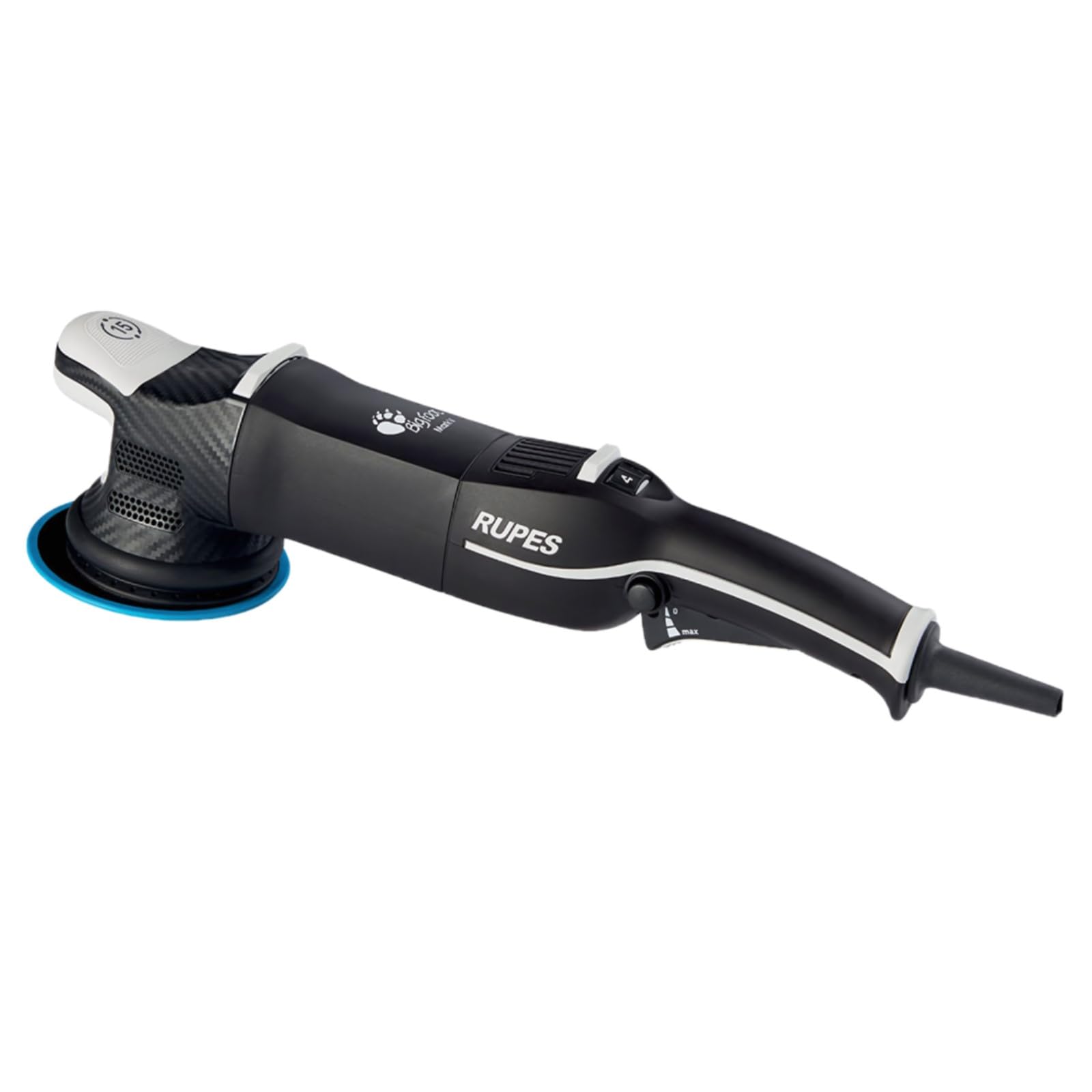
If a professional detailer could keep only one machine, this is usually it. The 15mm orbit on a 5-inch backing plate is the sweet spot between cutting speed and reach — enough throw to correct an entire hood in reasonable time, compact enough to still work doors, bumpers, and A-pillars without switching tools.
Mark V is the fifth generation of a machine that's been refined for over a decade, and it shows in details that matter over a full day of use: composite gears that run cooler and quieter, an anti-spin ring that keeps the pad seated on vertical panels, and a rubber-edged backing plate that shrugs off the occasional bump into trim.
- 15mm throw corrects a full car in reasonable time
- Lowest vibration of any long-throw DA in this class
- Rubber-edged backing plate protects trim on contact
- Composite gears run cooler over long sessions
- Tool only — pads and compounds add real cost
- Still stalls on the tightest curves like any long-throw DA
- Priced for someone doing this regularly, not once a year
RUPES BigFoot LHR21 Mark III Random Orbital Polisher

The LHR21 exists to solve one problem: covering a hood, roof, or truck bed door faster than a 15mm machine can manage. A 21mm orbit on a 6-inch plate moves far more pad area per pass, and the Mark III's stronger motor resists the stalling under pressure that made earlier BigFoot generations feel underpowered on stubborn clear coat.
It's rarely someone's only polisher — the plate is too large for bumpers, mirrors, and pillars — which is why it's almost always the second RUPES a detailer buys, paired with the 15mm or the Mini for everything the big plate can't reach.
- Fastest correction available on large, flat panels
- Mark III motor resists stalling under load
- Smooth and low-vibration for all-day sessions
- Mature accessory ecosystem shared across RUPES tools
- Plate is too large for bumpers, pillars, and curves
- Heaviest machine in the RUPES lineup
- Needs a second, smaller polisher to finish a full car
RUPES BigFoot LHR75E Mini Random Orbital Polisher

The 3-inch BigFoot exists for everywhere a full-size DA can't go: mirror caps, door handles, spoilers, pillars, and the tightly curved bumper sections that force a bigger plate to lift off the surface. A genuine 12mm throw on a 75mm plate means it still cuts like a real polisher rather than a novelty mini-tool.
Plenty of professional detailers run this one for more total hours per car than their primary machine, simply because so much of a modern car's surface area is small, curved trim rather than flat panel.
- Reaches areas a full-size polisher physically can't
- Real 12mm throw, not a watered-down mini orbit
- Light enough at 6 lb for extended one-handed work
- The cheapest entry point into the BigFoot ecosystem
- Painfully slow if used on a hood or roof
- Small 3-inch pads wear out faster
- Corded only — the cordless iBrid version costs double
FLEX PXE 80 12.0-EC Cordless Mini Polisher Set

The PXE 80 solves a different problem than any RUPES on this list: it swaps between a rotary head and 3mm or 12mm random orbital heads on the same 1.4 lb cordless body, tool-free. That flexibility, plus a total lack of a cord, is why it shows up more often in professional interior and headlight kits than any dedicated mini polisher.
The set ships with two 12V batteries, a charger, and a bag, so it's ready to run straight out of the box on emblems, mirror caps, and interior trim where reach and maneuverability matter more than raw cutting power.
- Rotary, 3mm, and 12mm heads on one cordless tool
- No cord to manage on overhead or interior work
- Two batteries and charger included in the set
- Excellent for headlights, emblems, and tight interior trim
- Small batteries need to stay in rotation
- Not a substitute for a full-size polisher on panels
- Pads and backing plates are proprietary FLEX sizes
FLEX XCE 8-125 18.0-EC Cordless Forced Rotation Polisher Set
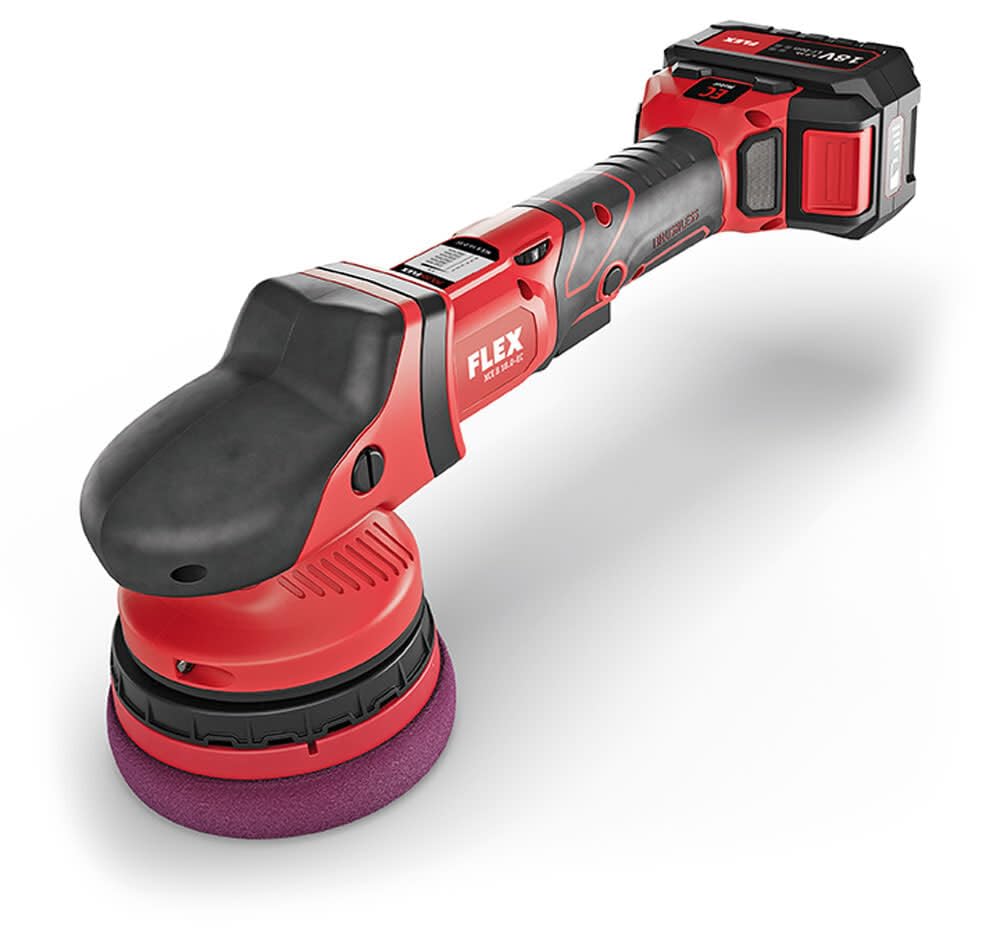
Forced rotation means the pad is gear-driven instead of free-spinning, so it physically cannot stall the way a standard DA does under pressure. That lets the XCE 8-125 cut like a rotary polisher on genuinely hard clear coats while its 8mm orbit still keeps the finish free of the holograms a true rotary can leave behind.
It's the cordless successor to a machine that was already a fixture in professional vans, now with a brushless motor and 18V battery platform that removes the cord without giving up any of the cutting power that made the original a specialist's tool for the toughest jobs.
- Gear-driven pad simply cannot stall on curves
- Rotary-level cut with DA-level safety margin
- Brushless and cordless with no power fade
- Runs cooler than a rotary on temperature-sensitive paint
- The heaviest and most expensive machine here
- Forced rotation feel takes real time to learn
- New enough that owner feedback is still limited
FLEX FC3321-Z Corded Brushless Random Orbital Polisher
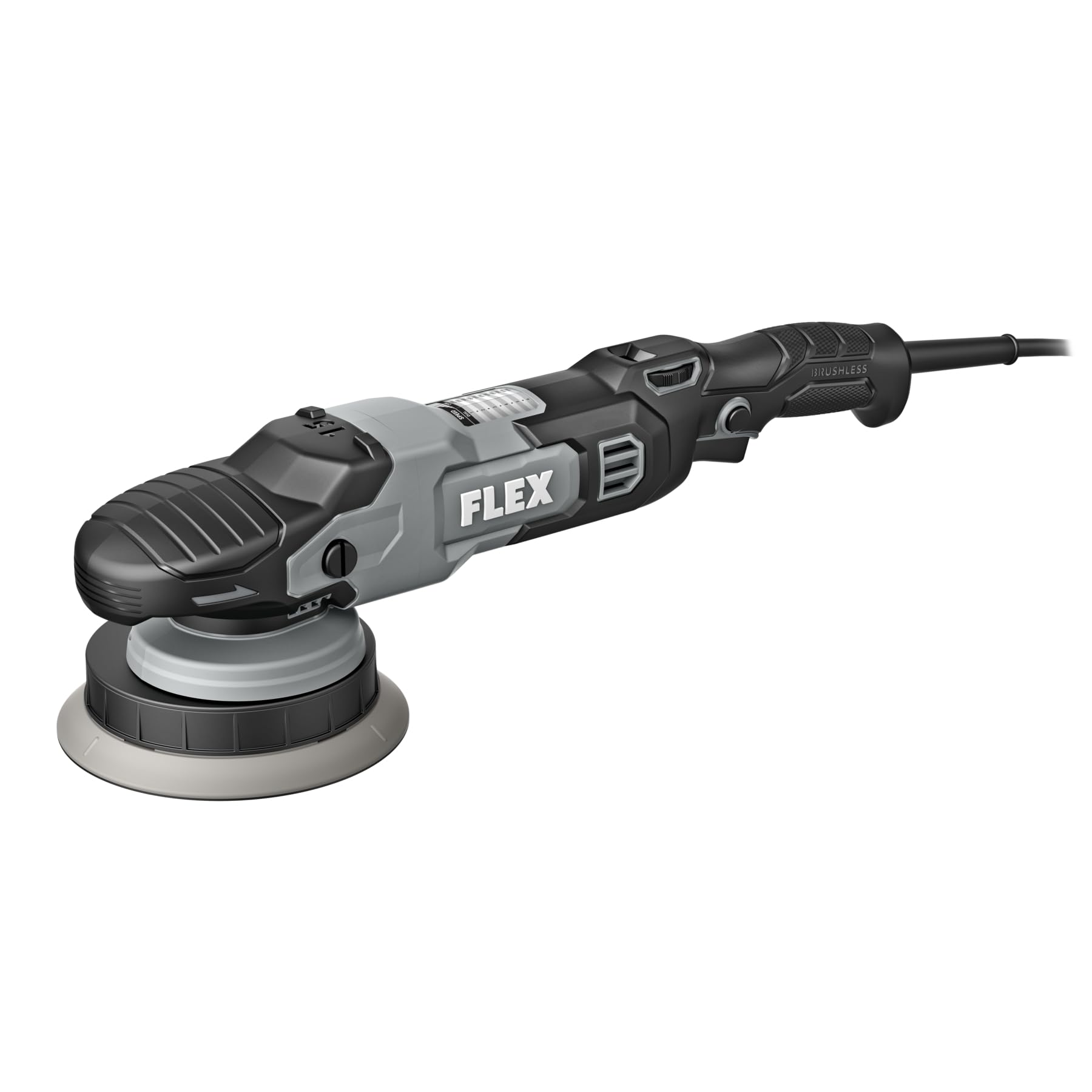
FLEX's newest corded long-throw pairs a brushless motor with constant-speed electronics that hold RPM as pad pressure increases, an 11-position dial for fine speed control, and a redesigned gear head aimed squarely at the high-frequency whine older FLEX polishers were known for.
For a detailer who wants FLEX build quality and a genuine long-throw orbit without managing batteries or paying forced-rotation prices, this is the straightforward corded alternative to the XCE 8-125 above.
- Brushless motor holds speed steady under load
- 11-speed dial plus a variable-pressure trigger
- Noticeably quieter than earlier FLEX generations
- Corded, so there's no battery to plan around
- Brand-new model with no long-term track record yet
- Tool only — pads sold separately
- RUPES still has the larger pad ecosystem overall
RUPES or FLEX: How to Choose Between the Two Systems
RUPES builds around one drive type, refined. Every BigFoot in this lineup is a free-spinning random orbital — the difference between them is orbit size and plate diameter, which makes it easy to build a two- or three-machine kit that covers a full car without relearning technique between tools. It's also the deeper accessory ecosystem: pads, backing plates, and polishes from RUPES and third parties are built around these exact plate sizes.
FLEX spreads across drive types instead. The PXE 80's swappable heads, the XCE 8-125's forced rotation, and the FC3321-Z's free-spinning orbit are three different ways of moving a pad, aimed at three different problems — small-area versatility, maximum cut on hard paint, and corded value, respectively. That makes FLEX the stronger choice if your work spans genuinely different jobs rather than a repeatable full-car routine.
In practice, a lot of professional kits end up with both brands: a RUPES BigFoot or two for the bulk of a car, and a FLEX PXE 80 living in the same bag for the interior and trim work neither BigFoot is built for.
Do You Actually Need a Professional Polisher?
If you're correcting your own car once or twice a year, you almost certainly don't need to start here — our guide to beginner DA polishers covers machines like the Chemical Guys TORQX that are built for exactly that, at a fraction of the cost. The tools on this page earn their price when you're covering multiple cars, doing it professionally, or correcting hard European clear coat where a consumer DA genuinely runs out of cutting power. Buying a professional machine you use twice a year mostly just means paying more to store it.
Whichever tier you're in, the fundamentals don't change: correct defects with the polisher before you protect the paint. A compound or polish matched to the machine does the actual defect removal, and a ceramic coating afterward is what locks the corrected finish in.
Frequently Asked Questions
Is a RUPES or FLEX polisher overkill for a home garage?
For most owners correcting their own car once or twice a year, yes — a beginner DA polisher does the same job for a fraction of the price. These machines earn their cost when you're polishing multiple cars a year, doing it as a side business, or regularly working on hard, defect-prone clear coats where a consumer polisher runs out of cutting power.
What's the real difference between a 15mm and 21mm RUPES orbit?
Orbit size trades reach for speed. A 15mm orbit on a 5-inch plate is versatile enough to correct an entire car, including tighter panels. A 21mm orbit on a 6-inch plate cuts faster on large flat panels like hoods and roofs but is too large to safely work bumpers, mirrors, or pillars.
What does forced rotation mean on the FLEX XCE 8-125?
The pad is gear-driven rather than free-spinning, so pressure can't stall it the way it can on a standard dual action polisher. That lets it cut more like a rotary polisher on hard paint while keeping much of the safety margin a random orbital motion provides.
Do these polishers come with pads and compound included?
No — all six are sold as bare tools or tool sets. Budget separately for pads, backing plates, and a compound or polish matched to the paint you're correcting; see our compound and polish guide for options.
Can I use a professional polisher as my only, first-ever machine?
You can, but it isn't the easiest way to learn. These machines are built for detailers who already understand pad selection, pressure, and working sections — a beginner DA polisher is far more forgiving to learn technique on before stepping up to this tier.
The Verdict
For most professionals building their first serious kit, the RUPES BigFoot LHR15 Mark V is the single machine to buy first — it covers the largest share of a car's surface on its own. Add the LHR21 Mark III once large panels are slowing you down, and the LHR75E Mini or FLEX PXE 80 for the tight areas neither BigFoot reaches. Save the FLEX XCE 8-125 for the hardest clear coats on your schedule, and consider the FC3321-Z if you want FLEX's build quality without the forced-rotation learning curve or price.