
The Best Products for Winter Windshield & Glass Visibility (2026)
DetailCompare is reader-supported. When you buy through links on this page, we may earn an affiliate commission at no extra cost to you. Prices noted were accurate as of November 2026 — click through for current pricing.
Most winter car-care advice is about paint and salt. Almost none of it is about the glass you're actually looking through. That's a gap worth closing in November: sunset keeps moving earlier, rain turns to sleet, and the film that oily wiper blades and heater vents leave on a windshield is far more dangerous at dusk in the rain than it is on a clear July afternoon. A dirty windshield that's merely annoying in summer becomes a genuine visibility problem once headlights from oncoming traffic start smearing across haze and water spots.
None of our other winter posts tackle this directly. Our cold-weather car wash guide covers washing the exterior when hoses freeze, and our water spot removal guide covers the mineral deposits themselves, but neither focuses on the specific combination winter throws at glass: road film building up faster between washes, rain that needs to shed instead of sheet, and the fog and defrost haze that forms inside the cabin once the heater's running constantly. These five catalog products cover that combination, from a long-term rain-repellent coating down to the towel you dry the glass with.
Our Top Picks
- Best long-term fix for rain and road spray: Gtechniq G1 ClearVision Smart Glass
- Best glass cleaner for ceramic-coated vehicles: CarPro Clarify Glass Cleaner
- Best budget streak-free glass cleaner: Gyeon Glass Cleaner
- Best for removing existing water spots and haze: Adam's Water Spot Remover
- Best towel for a streak-free finish: Chemical Guys Waffle Weave Gray Matter Drying Towel
Why Glass Needs Its Own Winter Routine
Paint care and glass care solve different problems. A wax or sealant is judged on gloss and durability; glass is judged on whether you can see through it at 60 mph in the rain with headlights coming the other way. Three things make that harder from November through March. First, road spray carries more oily film and salt residue onto a windshield per mile than summer driving does, so the glass gets dirty faster between cleanings. Second, rain that doesn't bead and run off sits and sheets across the glass instead, which is exactly when a wiper blade smears it into a hazy film rather than clearing it. Third, the defroster runs constantly, and the mix of warm, humid cabin air against cold glass both fogs the inside of the windshield and bakes any existing residue onto it.
Ordinary dish soap or a paper towel makes most of this worse, not better — dish soap strips factory and aftermarket water-repellent treatments, and paper towels leave lint and streaks that scatter light from oncoming headlights. The products below are built specifically for glass: an ammonia-free or coating-safe cleaner for routine upkeep, a bonded coating for long-term rain repellency, a dedicated remover for mineral spots that a cleaner alone won't touch, and a lint-free towel to finish the job without leaving new streaks behind.
Comparison Table
| Product | Price Tier | Format | Best For |
|---|---|---|---|
| Gtechniq G1 ClearVision | Not listed | Bonded glass coating, 15 ml | Long-term rain-beading and visibility |
| CarPro Clarify | $20–50 | Streak-free glass cleaner | Ceramic-coated glass and trim |
| Gyeon Glass Cleaner | Under $20 | Ammonia-free glass cleaner, 500 ml | Routine cleaning, tinted windows |
| Adam's Water Spot Remover | Under $20 | Mineral deposit remover | Existing hard-water spots and haze |
| Chemical Guys Waffle Weave Gray Matter | Under $20 | Waffle-weave microfiber towel, 25x36 in | Streak-free drying and buffing |
The Picks in Detail
Gtechniq G1 ClearVision Smart Glass

Wipe-on rain repellents wear off in weeks. G1 ClearVision is a chemical bond to the glass itself, which the catalog rates for up to 20,000 miles rather than a handful of washes. Once cured, it makes rain bead and sheet off the windshield at speed instead of smearing under the wiper, which is the single biggest visibility improvement you can make for night driving in a downpour. It also helps on the small annoyances of a winter windshield — ice, bugs and bonded sap all let go easier from a coated surface than from bare glass.
- Chemical bond lasts far longer than wipe-on rain repellents
- Improves wet-weather visibility
- Makes ice, bugs and sap easier to remove
- Wiper-resistant once cured
- Glass must be fully decontaminated first
- Small bottle and slower application than spray repellents
CarPro Clarify Glass Cleaner

If you've already applied a glass coating like G1 ClearVision — or you have ceramic coating on the paint and don't want to risk a harsh cleaner stripping it near the trim — Clarify is built for that situation specifically. The catalog lists it as safe on ceramic-coated glass while still cutting through the oils, fingerprints and road film that build up fast in winter. It's rated for both interior and exterior glass, so the same bottle handles dash-cam smears and dog-nose prints on the inside along with road spray outside.
- Leaves glass completely streak-free without residue or hazing
- Safe to use on ceramic-coated glass without damaging protective coatings
- Effectively removes oils, fingerprints and stubborn dirt buildup
- Works on both interior and exterior glass surfaces
- Premium pricing compared to basic automotive glass cleaners
- Requires proper application technique to avoid streaking on very hot glass
- 1-liter bottle may be undersized for professional detailers doing multiple vehicles
Gyeon Glass Cleaner

For routine cleaning without a coating to protect, Gyeon's ammonia-free formula is the simpler, cheaper option. The catalog describes it as streak-free on both factory and aftermarket tint, which matters in winter since ammonia-based cleaners can degrade tint film over repeated use right as you're cleaning the glass more often to stay ahead of road film. It's also listed as safe on interior screens and displays, so the same bottle covers the infotainment screen that fingerprints collect on all winter.
- Ammonia-free formula is safe for all window types, including factory and aftermarket tints
- Streak-free formula leaves no residue or haze on glass surfaces
- Removes stubborn oil films and fingerprints in one application
- Safe for interior use on screens and displays
- 500 ml bottle may require refilling frequently for heavy-use detailing
- Requires proper application technique to avoid streaking on extremely dirty windows
Adam's Water Spot Remover

A glass cleaner wipes away surface grime, but it won't touch mineral deposits that have already etched into the glass from rain, sprinklers or road spray that dried before you could wipe it. Adam's Water Spot Remover is built for that specific problem: the catalog lists it as dissolving calcium, magnesium and hard water stains from glass and paint without damaging the surface. Run it before you apply a glass coating or even a plain cleaner, since spotted glass will keep scattering headlight glare no matter how clean the rest of the pane is.
- Effectively removes calcium, magnesium and hard water stains from paint, glass and more
- Safe for use on car paint and automotive finishes without causing damage
- Versatile on windows, glass and other household surfaces
- Convenient 16 oz size is portable and long-lasting
- May require multiple applications on heavily built-up mineral deposits
- Requires proper ventilation and careful handling due to acidic formula strength
Chemical Guys Waffle Weave Gray Matter Drying Towel
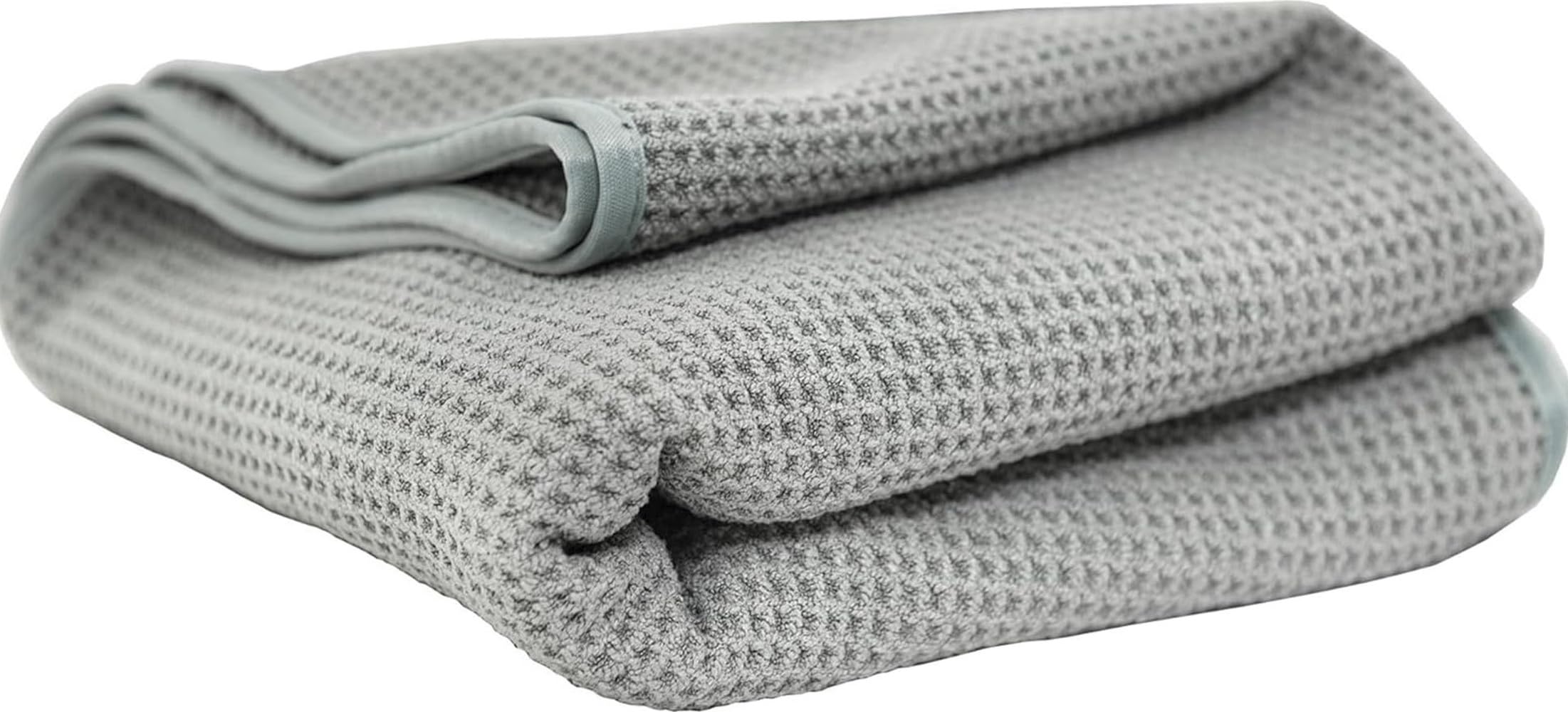
Every product above is wasted if you finish the job with a paper towel or an old shop rag. The catalog lists this waffle-weave towel as excelling specifically on glass and smooth paint, drying streak-free without drips — its textured weave is built differently from a plush drying towel, with less pile to leave lint behind on glass. At 25x36 in it's large enough to be the dedicated second towel most detailers keep just for windows and final passes, which matters once you're also using it after a glass cleaner or coating application.
- Waffle texture leaves glass streak-free
- Large 25x36 in coverage
- Outstanding owner feedback
- Thin profile dries quickly between uses
- Less absorbent than plush or twisted-loop towels
- Can feel grabby on unwaxed paint
How to Set Up a Winter Glass Routine
- Decontaminate the glass first. Any coating or cleaner works better, and lasts longer, on glass that's free of embedded road film and old wax overspray — a plain cleaner pass before anything else pays for itself.
- Remove existing water spots before coating. Applying a rain-repellent coating over etched mineral deposits locks the haze in place instead of clearing it.
- Apply the glass coating to all exterior glass, not just the windshield. Side mirrors and side windows benefit from the same beading effect, especially for visibility in side mirrors during highway spray.
- Clean the inside of the windshield separately. Interior haze comes from off-gassing plastics and the defroster baking in dust, not from rain, so it needs its own pass with a streak-free cleaner and a dedicated towel.
- Keep a second towel reserved for glass only. A towel that's touched tire dressing or a wax applicator will streak glass no matter how clean it looks.
- Reapply the cleaner routine more often than you would in summer. Road film builds up faster from salt brine and spray, so glass that looked fine on Monday may already be hazy by Friday.
Buying Advice
If you only buy one thing from this list, make it the glass cleaner you'll actually use every week — Gyeon's bottle for a straightforward, budget-friendly routine, or CarPro Clarify if you're protecting a ceramic coating on the glass or surrounding trim. The Gtechniq coating is the higher-commitment purchase: it needs properly decontaminated glass and some patience to apply correctly, but it's the only product here that actually changes how rain behaves on the windshield instead of just cleaning what's already there. Treat the water spot remover as a one-time fix before you coat or seriously clean the glass, not a weekly product, and keep the waffle-weave towel dedicated to glass so it never picks up oils from paint or trim that would undo everything else on this list.
Frequently Asked Questions
Does a glass coating actually improve visibility in the rain?
Yes, in a specific way: it makes water bead up and sheet off the glass at speed instead of spreading into a film that a wiper smears rather than clears. The catalog lists Gtechniq G1 ClearVision as improving wet-weather visibility for exactly this reason, and the effect is most noticeable at highway speeds and in heavier rain, less so at a dead stop.
Can I use a regular household glass cleaner on my car's windshield?
You can, but ammonia-based household cleaners can degrade window tint over repeated use, and they're not formulated to be gentle on ceramic coatings that might be on the glass or nearby trim. A dedicated automotive glass cleaner like Gyeon Glass Cleaner or CarPro Clarify avoids both issues.
Why does my windshield fog up more in winter even after I clean it?
Interior fogging comes from humid cabin air condensing on cold glass, not from dirt on the glass itself — though a film of residue on the inside of the windshield does make fog cling and streak worse once it forms. Cleaning the interior glass with a dedicated cleaner and towel, as described above, reduces how much residue is there for fog to grab onto.
Do I need to remove water spots before using a glass cleaner?
Not for routine cleaning, but a glass cleaner alone won't remove spots that have already etched into the surface from hard water or road spray. If spots remain after a normal cleaning pass, treat them with a dedicated remover like Adam's Water Spot Remover before applying any kind of glass coating.
For the rest of your winter routine, see our guide to washing your car in cold weather and our full guide to removing water spots from paint and glass.