
The Best Dashboard & Trim UV Protectants of 2026
DetailCompare is reader-supported. When you buy through links on this page, we may earn an affiliate commission at no extra cost to you. Prices noted were accurate as of October 2026 — click through for current pricing.
Fall is when many owners stop thinking about the inside of their car. The sun sits lower, but it still hits the windshield hard, and the dashboard takes that heat every afternoon. Then the cold arrives, the heater runs, and vinyl, rubber and plastic that were already faded start to look dry and brittle. A UV protectant is one of the cheapest ways to slow that down.
This guide covers six interior products from our catalog. We group them by what each one does best, and we note where a product has to be diluted. Every product is listed with its price tier.
If you have not read our interior cleaner roundup yet, start there for the cleaning step. This article covers what goes on the surface after it is clean, as part of the fall and winter prep routine.
Our Top Picks
- Best dedicated UV protectant: 303 Automotive Protectant (UV Protection)
- Best all-in-one clean and protect: Adam's Total Interior Cleaner & Protectant
- Best for door seals and rubber trim: Griot's Garage Vinyl & Rubber Protectant
- Best for a quick refresh: Adam's Interior Detailer (16 oz)
- Best single bottle for the whole cabin: Chemical Guys Total Interior Cleaner (16 oz)
- Best concentrate for owners who mix: CarPro PERL Plastic & Rubber Protectant
Why UV Protection Matters More in the Fall
Ultraviolet light breaks down the polymers in vinyl, plastic and rubber. The first visible sign is color loss on the top of the dash and the upper door panels. Over time the surface dries out, goes chalky, and starts to crack at seams and around trim. Cold weather speeds this up because materials that have already dried out become stiff and split more easily when temperatures swing.
A protectant puts a layer between the surface and the light. It does not repair damage that has already happened, so the goal is to protect surfaces before they fade and keep the layer fresh through the winter.
Comparison Table
| Product | Price Tier | Finish | Surfaces Listed |
|---|---|---|---|
| 303 Automotive Protectant | Under $20 | Dry, non-greasy matte | Vinyl, plastic, rubber, leather |
| Adam's Total Interior Cleaner & Protectant | Under $20 | OEM look, no greasy residue | Leather, vinyl, plastics, glass |
| Griot's Garage Vinyl & Rubber Protectant | $20–50 | Satin | Rubber, vinyl, plastic, door seals, window frames |
| Adam's Interior Detailer (16 oz) | Under $20 | Non-greasy | Vinyl, leather, plastic, screens |
| Chemical Guys Total Interior Cleaner | Under $20 | Streak-free when buffed | Leather, vinyl, plastic, rubber, glass |
| CarPro PERL Protectant | $20–50 | Natural satin | Plastic, rubber, leather, trim |
The Picks in Detail
303 Automotive Protectant (UV Protection)

This is a protectant first, not a cleaner. The manufacturer positions it as a UV blocker for dashboards, trim and tires, aimed at stopping sun fading on vinyl, plastic and rubber. The matte finish is the look most owners want on a dash.
The main ongoing task is reapplication. The catalog lists a 4 to 6 week interval, so set it on a calendar rather than treating it as a once-a-year job.
- Dedicated UV protection against fading
- Dry, non-greasy matte finish
- Listed as safe on vinyl, plastic, rubber and leather
- It is a protectant, not a cleaner
- Needs reapplication every 4 to 6 weeks
Adam's Total Interior Cleaner & Protectant

If you want one bottle for the whole cabin, this is the one to look at. It is a multi-surface cleaner for leather, vinyl, plastics and glass, and the manufacturer describes a ceramic-type SiO2 layer for UV protection and water beading.
The trade-off is coverage. A 16 oz bottle goes quickly on a full interior, and on heavily textured trim it can leave a slight residue unless you buff it off.
- Cleans and protects in one step
- Works across leather, vinyl, plastics and glass
- Anti-static finish helps keep dust off the dash
- A 16 oz bottle depletes quickly on a full interior
- Higher price than single-purpose interior cleaners
- Can leave slight residue on textured surfaces if not buffed
Griot's Garage Vinyl & Rubber Protectant
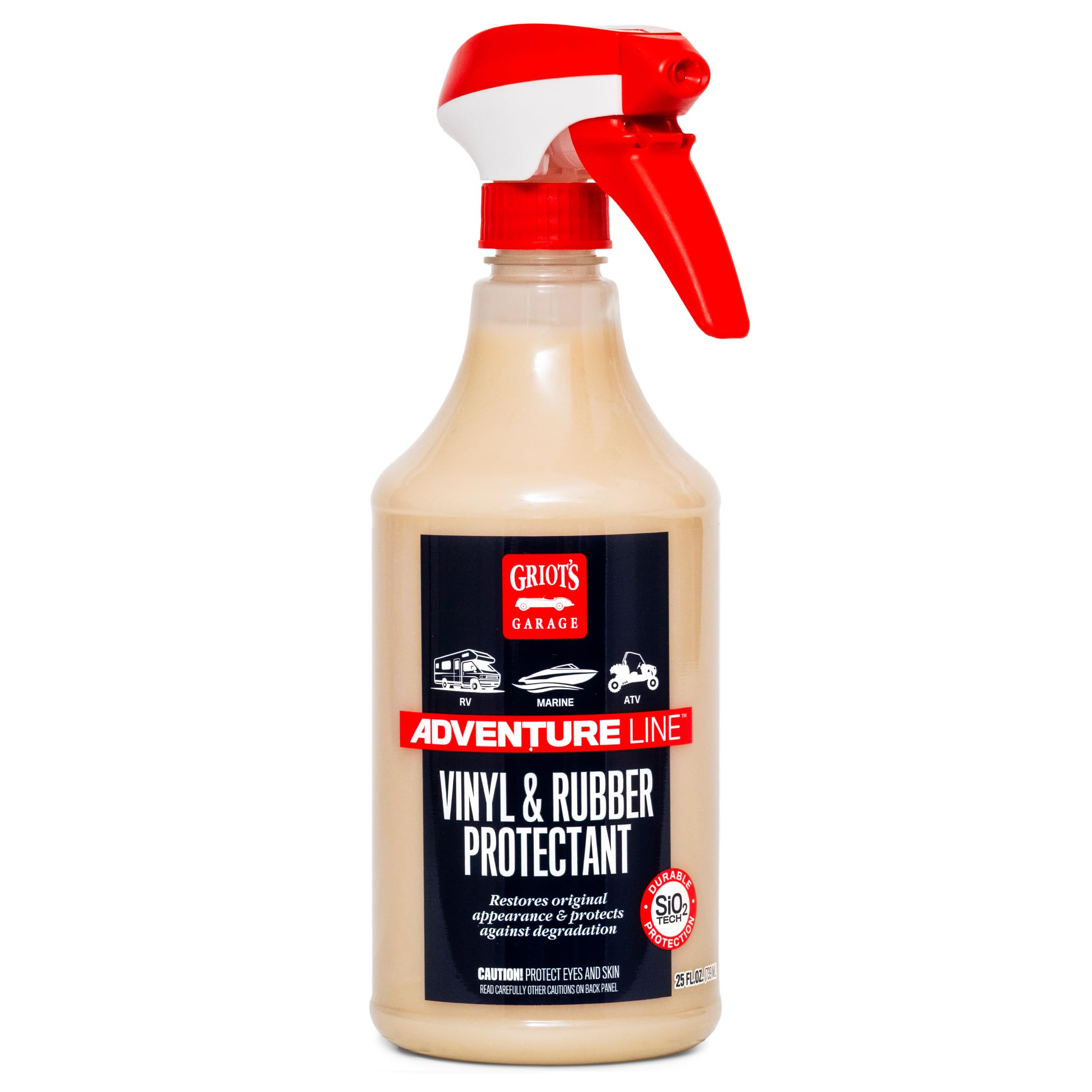
Door seals are the part of the cabin that winter hurts most. They sit where road salt and slush collect, and dry rubber is the first to stiffen and split. This product is built for rubber, vinyl and plastic, and the catalog lists door seals and window frames among its uses. It is marketed with SiO2 technology for water and grime resistance.
- SiO2 formula is marketed for water and grime resistance
- Works on door seals, trim, tires and window frames
- Dries to a satin finish
- Can need several applications on large vehicles
- Uneven application can look streaky
- Premium pricing compared with non-ceramic rubber protectants
Adam's Interior Detailer (16 oz)

The interior detailer suits the in-between weeks, when the cabin needs a wipe-down and a light UV coat rather than a full clean. The manufacturer describes it as a multi-surface formula for vinyl, leather, dashboards and screens, with UV protectants included.
Apply it to a towel rather than spraying screens directly, since the catalog notes it can streak on glass if not wiped thoroughly.
- One product for vinyl, leather, plastic and screens
- Includes UV protectants
- Non-greasy finish
- A 16 oz bottle may need frequent repurchasing on larger vehicles
- Priced above budget multi-purpose interior cleaners
- Can streak on glass and screens without careful wiping
Chemical Guys Total Interior Cleaner (16 oz)
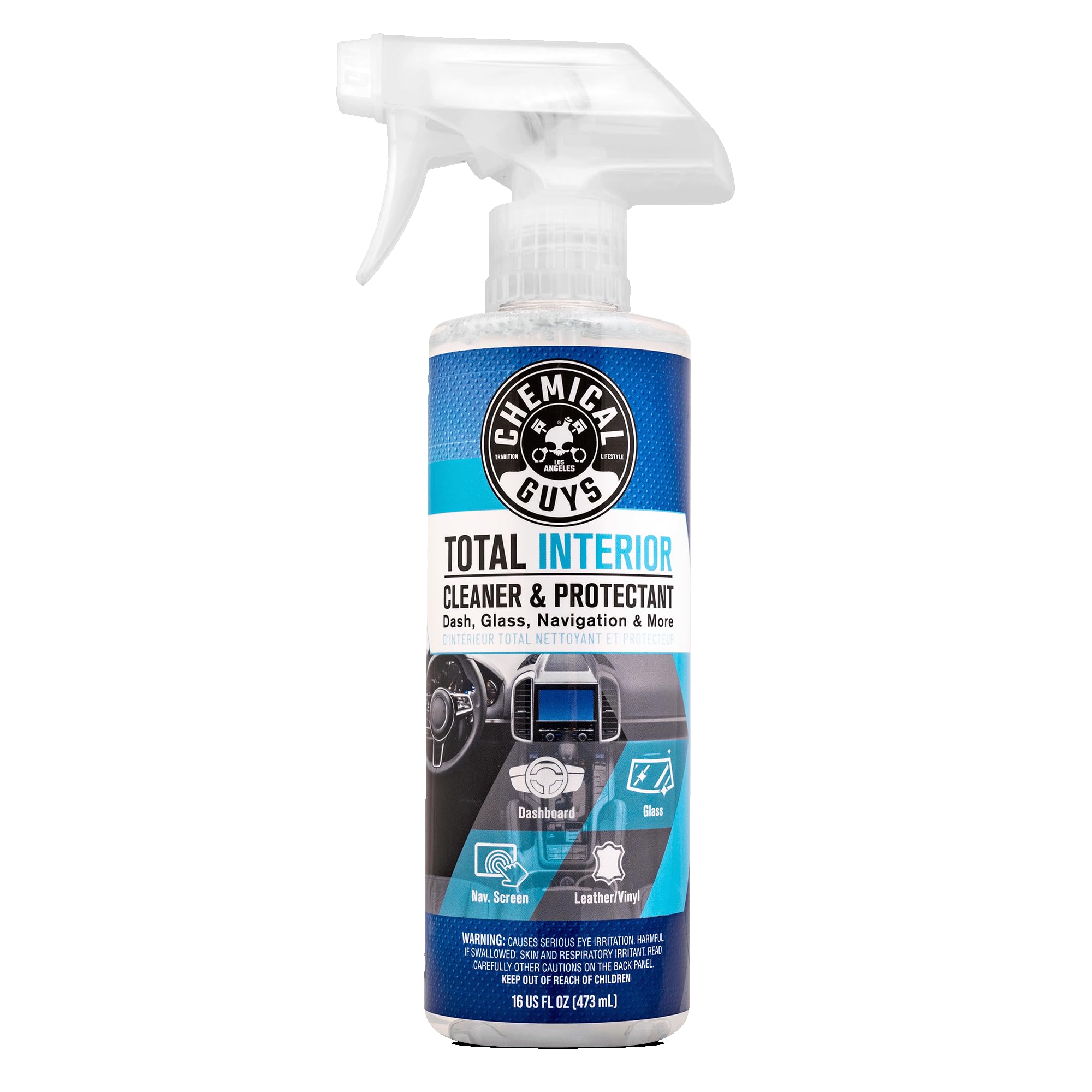
This is a cleaner and protectant in one bottle for leather, vinyl, plastic, rubber and glass. The catalog describes it as conditioning surfaces to resist fading and cracking, and it is a sensible choice for a family vehicle where one bottle covers the dash, seats and door panels.
On glass, use a clean, dry towel for the final pass, since haze can form if the surface is not wiped thoroughly.
- Works on leather, vinyl, plastic, rubber and glass
- Streak-free finish when buffed
- Conditioning helps resist fading and cracking
- May need refills on larger vehicles
- Can leave haze on glass if not buffed
- Higher price than single-purpose interior cleaners
CarPro PERL Plastic & Rubber Protectant

PERL is a water-based, concentrated protectant for plastic and rubber. The catalog says it gives a natural satin finish with UV protection and works on tires, trim, leather and engine compartment components. Because it is a concentrate, the mix ratio controls both the finish and how long it lasts.
Before you mix, use the dilution calculator to work out the ratio for the amount you want. Start with a weaker mix and add product only if the finish looks thin, since a stronger mix can look greasy and build up in textured trim.
- Water-based formula
- Concentrate stretches across multiple vehicles
- Natural satin finish without a greasy look
- Requires dilution, which is less convenient than ready-to-use sprays
- Satin finish is less glossy than some owners prefer on tires
- May need more frequent reapplication than solvent-based products
How to Protect Your Interior Before Winter
A protectant only works well on a clean surface, so the order matters. A typical sedan takes about an hour.
- Vacuum first. Remove grit from seams, vents and door pockets. Grit left behind gets ground into the surface when you wipe.
- Clean the surfaces. Use a cleaner suited to the material, working in small sections. Our interior cleaner roundup covers the choices.
- Let it dry completely. Protectant over a damp or residue-covered surface can streak or trap dirt.
- Apply a thin, even coat. Thick coats are the most common cause of greasy, streaky results.
- Buff off the excess. Use a clean microfiber towel for a matte or satin finish, and a separate dry towel for glass.
- Protect the rubber separately. Door seals absorb more product than the dash, so use a light coat to avoid a sticky feel.
Reapply on the schedule the product sets. For 303, that means every four to six weeks during sunny months. Cold weather slows evaporation, so avoid applying near freezing.
Buying Advice
Start with your surfaces. Soft-touch vinyl, leather with many seams, and exposed rubber trim each call for different products, and the surface column in the comparison table is the fastest check.
Next, decide how many steps you want. An all-in-one cleaner and protectant is the simplest option. If you already have a cleaner you like, a dedicated UV protectant or interior detailer will do a better job on the protection step. For door seals and window frames, a rubber-focused product is the right tool.
Finally, think about finish. Matte and satin suit dashboards because they avoid glare, while glossy finishes look good for a day and then collect dust.
Frequently Asked Questions
Do I need a protectant if my car is parked in a garage?
Less than a car parked outside, but yes. Garages still get daylight through the windows, and interior temperatures swing as the car warms and cools. A protectant helps with dryness and fading, and it costs very little to keep up.
Can I use a protectant on leather?
Several products above list leather as a surface, but check the surface list before you apply anything. A general protectant can leave leather feeling greasy, and a dedicated leather conditioner is often the better choice for seats.
How often should I reapply an interior protectant?
Follow the product's own interval. The catalog lists four to six weeks for 303. Reapply sooner if the surface looks dull or if you clean the interior often.
For the rest of the fall routine, see our 5-step fall and winter car prep checklist. For the exterior side of winter protection, our wax roundup covers products that handle salt and road grime on paint.