
The Best Leather Cleaners & Conditioners for Car Seats in 2026
DetailCompare is reader-supported. When you buy through links on this page, we may earn an affiliate commission at no extra cost to you. Prices noted were accurate as of October 2026 — click through for current pricing.
Leather seats take more abuse in the fall and winter than most owners expect. Cold air dries the hide, the heater and heated seats pull moisture out of it, and wet coats, road grit and salt get worked into the grain every time someone gets in. The first signs are usually a dull or chalky look on the bolsters and a fine crazing along the driver's seat, where the leather flexes most.
This guide covers five leather products from our catalog. Each one is grouped by the job it does best, and each one is listed with its price tier where the catalog gives one. Leather care has two parts, cleaning and conditioning, and the most common mistake is conditioning a dirty surface, which seals grime into the grain. Clean first, then condition.
If you have not read our interior cleaner roundup, start there for the general cleaning step. This article focuses on leather specifically, as part of the fall and winter prep routine.
Our Top Picks
- Best two-step system: Chemical Guys Leather Cleaner & Conditioner Kit (2 x 16 oz)
- Best conditioner for dry leather: Lexol All Leather Conditioner (16.9 oz)
- Best for light and white leather: Leather Honey Leather Conditioner (8 oz)
- Best one-step for light maintenance: Meguiar's Gold Class Rich Leather Cleaner & Conditioner (15.2 oz)
- Best cleaner for heavy soiling: Gyeon LeatherCleaner
Why Leather Needs Two Products, Not One
Leather is a natural hide with a protective topcoat and natural oils underneath. Cleaning removes the dirt, body oils and sweat that sit on top of the grain. Conditioning puts oils and lubricants back into the hide so it stays flexible. If you condition over dirt, the grime stays in the grain and the surface feels tacky or looks darker than it should. If you clean and skip conditioning in winter, the leather has nothing protecting it from dry air.
That is why two-step systems are the standard for serious care. One-step products exist and they have a place, but they are a compromise: they clean lightly and condition at the same time, so they work best on leather that is already in decent shape.
Comparison Table
| Product | Price Tier | Format | Best For |
|---|---|---|---|
| Chemical Guys Leather Kit | $20–50 | Two-step cleaner and conditioner | Full seat care with control over each step |
| Lexol All Leather Conditioner | Under $20 | Conditioner only | Dry, stiff leather that needs flexibility |
| Leather Honey Conditioner | Under $20 | Conditioner only, slow soak-in | Light and white leather |
| Meguiar's Gold Class Rich Leather | — | One-step spray | Light maintenance between deep cleans |
| Gyeon LeatherCleaner | $20–50 | Deep cleaner | Oil and dirt buildup before conditioning |
The Picks in Detail
Chemical Guys Leather Cleaner & Conditioner Kit (2 x 16 oz)

This kit pairs a pH-balanced leather cleaner with a leather conditioner that rehydrates and protects against cracking and fading. The manufacturer says it is safe on natural, sealed and synthetic leather, which covers most factory seats.
The advantage of two bottles is control. You can clean a heavily soiled driver's bolster without over-conditioning the rest of the seat, and you can skip the conditioner in summer if the leather still feels supple. The trade-off is time: two steps take longer than an all-in-one, and the conditioner can feel slick if you overapply it.
- Separate cleaner and conditioner give more control than one-step sprays
- pH-balanced cleaner is designed not to change leather texture or color
- Works on car seats, furniture and accessories
- Two steps take longer than an all-in-one product
- Conditioner can feel slick if overapplied
Lexol All Leather Conditioner (16.9 oz)
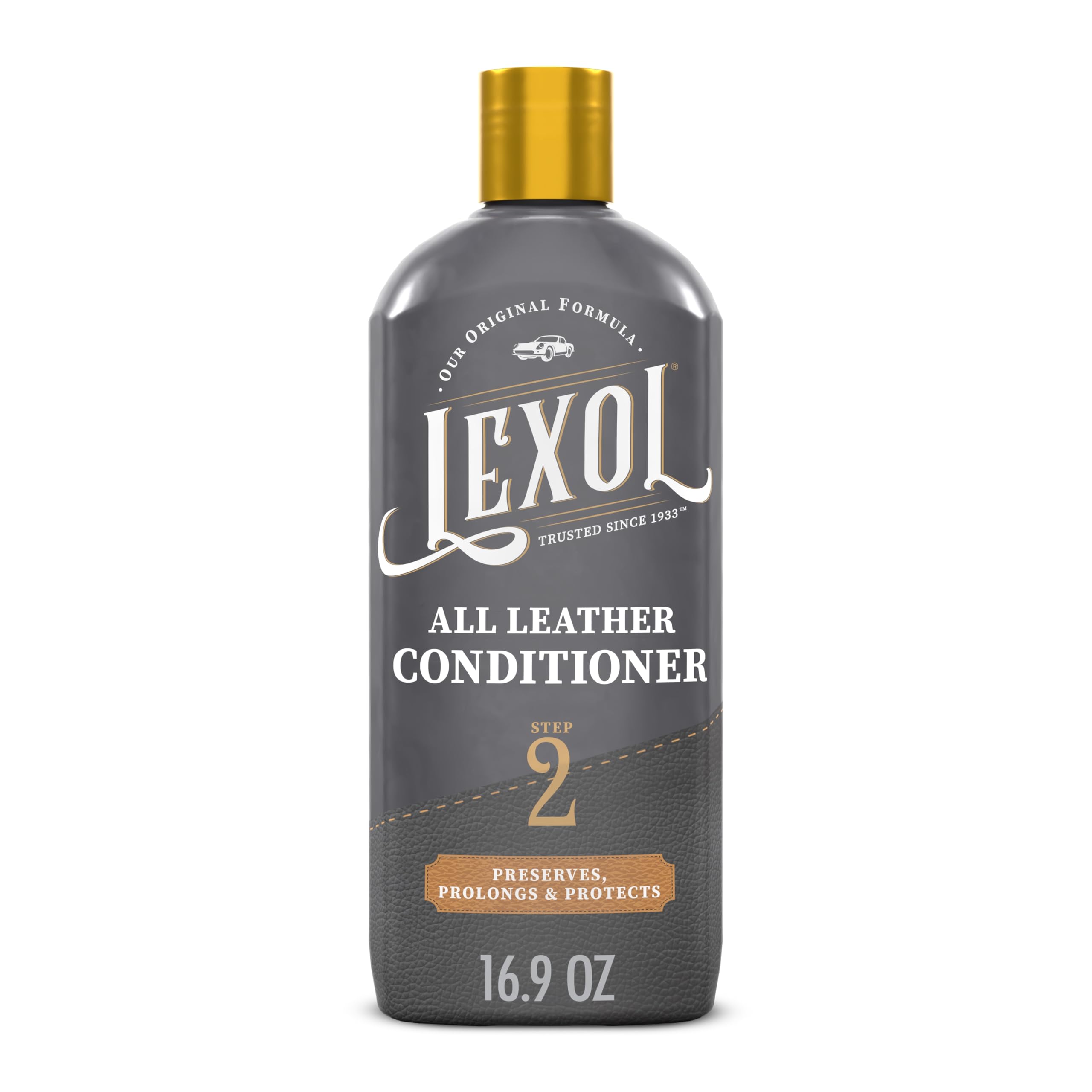
Lexol's conditioner is built to follow the brand's pH-balanced cleaner. Its fine oil droplets are described as soaking into the leather to restore flexibility and help prevent cracking, which is exactly what stiff, dry seats need in January. The finish is supple and non-greasy, and the bottle is large for the price.
Because it is a conditioner only, the cleaning step is yours to do first. It is also not meant for suede, Alcantara or coated vinyl, so check the material on every seat and trim piece before you start.
- Restores flexibility to dry leather
- Leaves a non-greasy, supple finish
- Large bottle at a low price
- A conditioner only, so clean leather first
- Not for suede, Alcantara or coated vinyl
Leather Honey Leather Conditioner (8 oz)
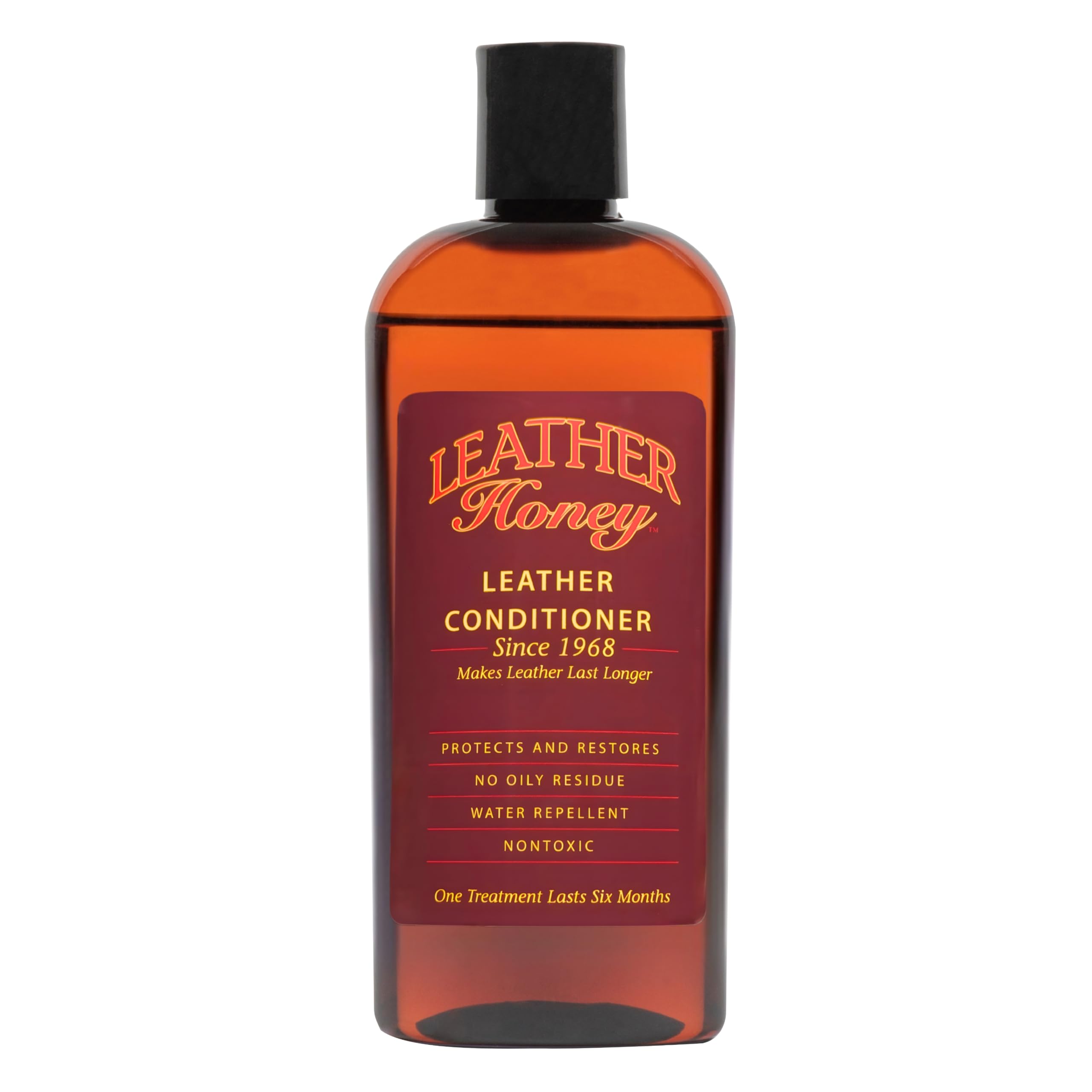
Light-colored leather is the case where product choice matters most. Leather Honey is marketed as safe for any color, including white, and as a non-toxic formula made in the USA. You apply a thin coat with a lint-free cloth and let it soak in for at least two hours, ideally overnight, so plan to use it on a day the car is not needed.
The small bottle goes further than its size suggests because only a thin layer is needed. The main risk is overapplication: the texture is thick, and excess left on the surface can feel tacky.
- Marketed as safe for white and light leather
- Non-toxic formula made in the USA
- A little product covers a lot of leather
- Needs two hours to overnight to absorb
- Thick texture can leave residue if overapplied
Meguiar's Gold Class Rich Leather Cleaner & Conditioner (15.2 oz)
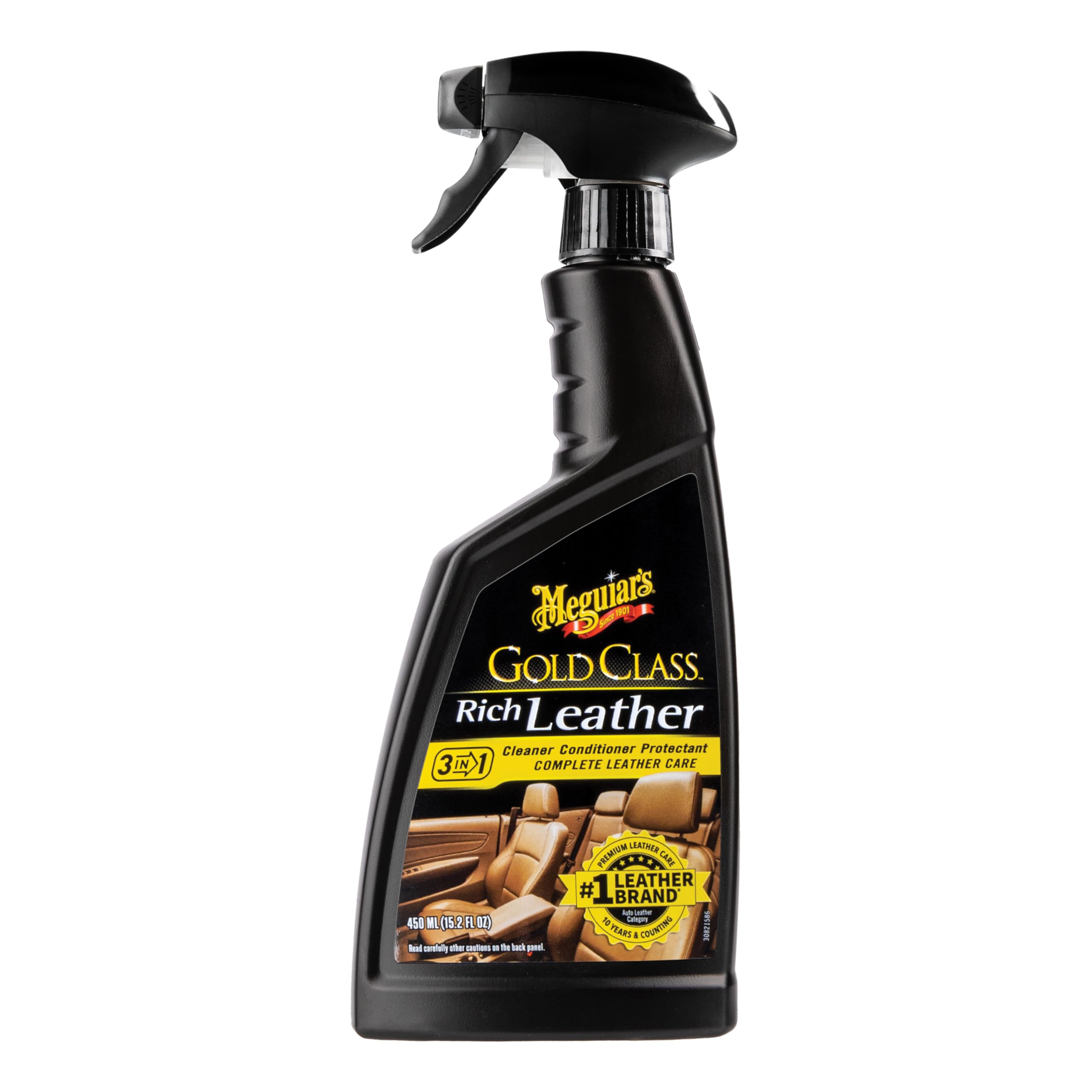
This is a spray that cleans, conditions and adds UV protection in one step, with aloe and leather conditioners in the formula. It dries to a non-greasy finish without the white residue that some leather products leave in seams. It is also one of the easiest leather products to find at an auto parts store.
Use it for the in-between cleans, when the seats are lightly soiled and you want them kept supple. It will not match a dedicated cleaner on heavily soiled leather, and the manufacturer says it is not intended for suede or Alcantara.
- Cleans and conditions in a single step
- Built-in UV protection against drying and fading
- Non-greasy finish that leaves no white residue
- Will not match a dedicated cleaner on heavily soiled leather
- Not intended for suede or Alcantara
Gyeon LeatherCleaner

When leather is genuinely grimy, a stronger cleaner saves time. Gyeon describes this as a deep cleaner that removes oil, dirt and discoloration from car leather and leaves a natural matte finish with no residue. The manufacturer positions it as a pre-treatment before coating, so it suits leather that has built up years of body oil.
Because it is a strong formula, the catalog calls for ventilation and protective gloves, and says not to oversaturate the leather. Follow it with a conditioner, since a deep cleaner removes some of the oils the leather needs to stay flexible.
- Removes stubborn oil, dirt and embedded contaminants
- Leaves a natural matte finish without residue
- Described as safe on premium and delicate automotive leather
- Strong formula needs ventilation and protective equipment
- Premium price compared with standard leather cleaners
- Easy to over-saturate if applied carelessly
How to Clean and Condition Leather Seats
Plan on about an hour for a sedan's front seats, plus drying time. Work in the shade and never on hot leather.
- Vacuum first. Get grit out of the seams, stitching and the gap between the seat and console. Grit left on leather acts like sandpaper once you start scrubbing.
- Check the material. Confirm that each seat or trim piece is leather and not suede, Alcantara or coated vinyl. The products above are for leather, so use a different product on anything else.
- Clean in small sections. Apply a light amount of cleaner to a soft brush or towel, not directly to the seat. Work the seam areas and bolsters, where body oil builds up.
- Wipe off the residue. Use a clean, damp microfiber towel to lift the cleaner and dirt, then dry the section with a dry towel.
- Let the leather dry fully. Conditioner applied over damp leather will not soak in evenly.
- Condition thinly. Apply a thin coat with a lint-free cloth. Give the product the soak time on its label. Lexol and Leather Honey both need a rest period before buffing.
- Buff off the excess. Remove any surface film so the seat is not tacky. A thick coat is the most common cause of a sticky seat.
For winter, a clean and condition every few months is a reasonable schedule for daily drivers. Cars that sit in a garage can go longer. If you have heated seats, check the leather after the first cold snap, since the heat is what dries it most.
Cleaning Mixed Interiors With a Dilutable Cleaner
Many cars have leather bolsters and cloth inserts in the same seat. For those, a dilutable cleaner that works on both materials can save you buying two products. Koch-Chemie Pol Star is a pH-neutral cleaner for textiles, leather and Alcantara that the manufacturer says can be diluted from 1:5 to 1:20. It is a foaming cleaner, and it can also be used as a pre-spray before extraction.
Because it is diluted, measure the ratio before you mix it. The dilution calculator will work out the amount of product and water for the strength you want. Start at a stronger mix on heavily soiled seats and dilute further for routine cleaning. Test a hidden area first, since a strong mix can leave leather looking darker until it dries.
Buying Advice
Start with what your leather needs. If the seats are dirty, you need a cleaner, and a two-step kit or a dedicated deep cleaner is the right tool. If the seats are clean but stiff, a conditioner on its own is enough. Light and white leather deserves a product that is explicitly marketed as safe for light colors.
Then decide how much time you want to spend. A one-step spray is the fastest route to supple seats, but it is a maintenance product rather than a full reset. Two-step systems take longer and give you more control. Neither replaces the other if you want a complete seasonal routine.
Finally, check the material list. Suede, Alcantara and coated vinyl need different products, so the surfaces you have will narrow the field before price comes into it.
Frequently Asked Questions
Can I use a protectant or dressing instead of a leather conditioner?
You can use one for the look, but a conditioner is designed to penetrate and restore flexibility, while a dressing mainly sits on the surface. In winter, the flexibility matters more. If you want UV protection, the Meguiar's and Chemical Guys products above include it, and our dash and trim UV protectant guide covers the products for hard plastics and vinyl.
Will leather conditioner fix cracks that are already there?
No. Conditioner keeps leather flexible and slows further drying, but it does not repair a crack that has already formed. Deep cracks usually need a professional repair. Fine surface crazing often improves with consistent conditioning over several cleans.
Is leather conditioner safe on white or light leather?
Leather Honey is marketed as safe for any color, including white. Check the label of any product before using it on light leather, and test a hidden spot first. A thick or greasy conditioner can darken light leather or leave residue that shows.
How often should I condition leather seats in winter?
For a daily driver, every few months is a sensible schedule, with a check after the first cold snap and again in late winter. Cars that sit in a garage can go longer. Condition sooner if the leather looks dull, feels stiff or shows fine lines along the bolsters.